
Categories
Real EstatePublished April 20, 2026
How to Read a Home Inspection Report: A Buyer's Field Guide for the Eastside

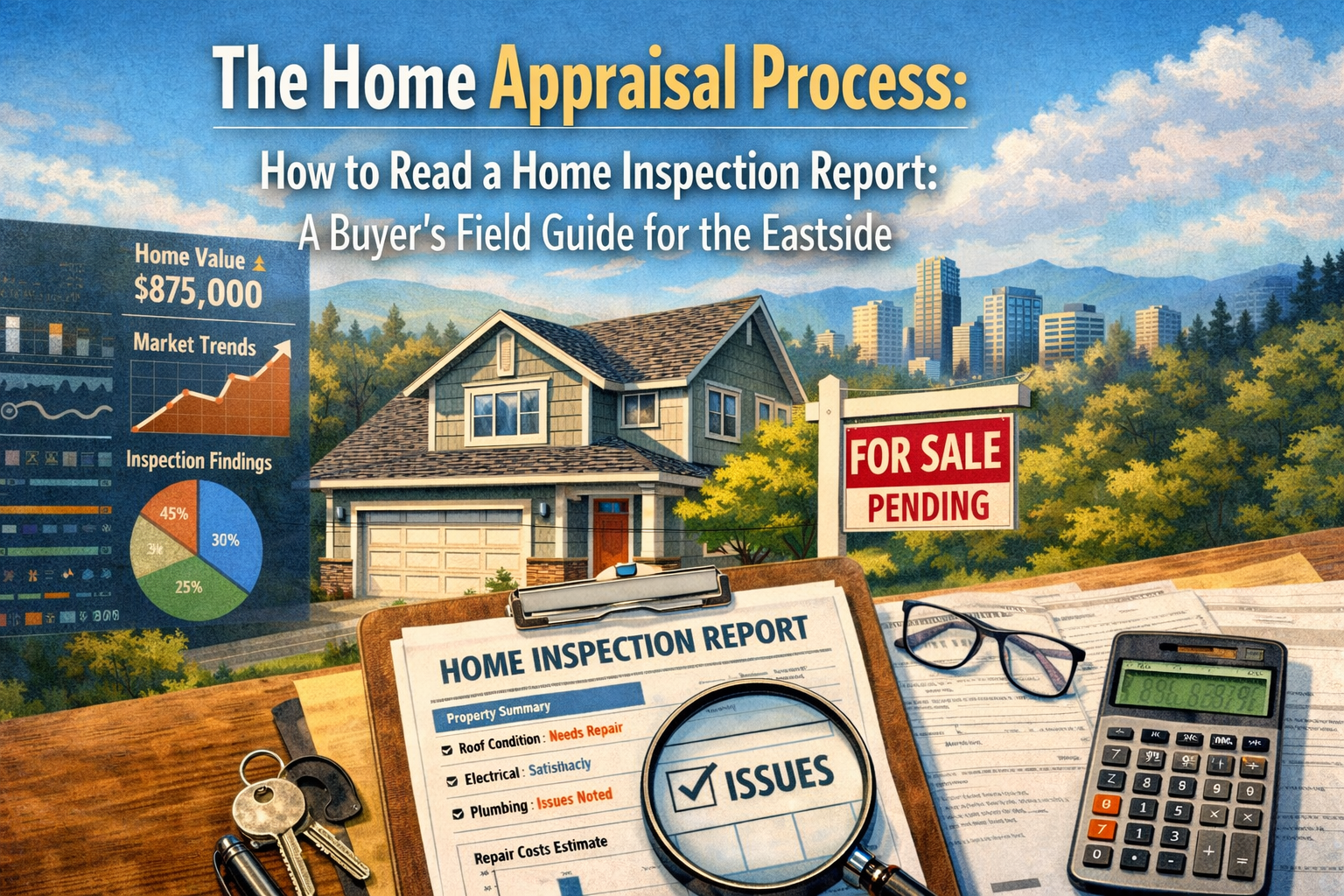
How to Read a Home Inspection Report: A Buyer's Field Guide for the Eastside
Every buyer I work with goes through the same moment. The home inspection report lands in their inbox — 40 pages, dozens of line items, photos of things they have never seen before — and the anxiety kicks in. Is this house falling apart? Did we make a mistake?
Here is what I tell every single one of them: a 40-page inspection report is not a bad sign. It means the inspector did their job. Almost every home on the Eastside — even a brand-new $2 million build — will generate a multi-page report. The skill is not avoiding reports with a lot of items. The skill is knowing which items actually matter.
After helping more than 300 buyers navigate inspections across Sammamish, Bellevue, Kirkland, and Issaquah, here is the field guide I wish every buyer had on day one.
Understand the Report's Purpose
A home inspection is not a pass/fail exam. It is a detailed inventory of the home's current condition, written by a licensed inspector whose job is to document everything — including minor issues, deferred maintenance, and items that are functioning fine but approaching end of life.
This means the report will list a dripping faucet with the same formatting as a cracked foundation wall. It does not rank by severity. That is your job — or more precisely, that is your agent's job. Read the report with your agent, not alone at midnight.
The Three Categories That Actually Matter
When I review an inspection report with a buyer, I sort every item into one of three buckets: safety issues, major systems, and cosmetic or maintenance items.
Safety issues come first. These include anything that poses an immediate risk to occupants — electrical panels with known fire hazards, missing GFCI outlets in kitchens and bathrooms, carbon monoxide detector gaps, gas line concerns, or structural issues affecting habitability. These are non-negotiable. Either the seller fixes them before closing or you negotiate a credit and address them immediately.
Major systems are the second priority. HVAC, roof, water heater, electrical panel, plumbing, foundation — these are the big-ticket items that drive repair costs. A roof with three years of life left on a $1.5 million Sammamish home could cost $30,000 to replace. That matters. A twenty-year-old water heater that is still functioning but near end of life is worth factoring into your negotiation.
Cosmetic and maintenance items are the third category — and they should stay there. Scuffed paint, a sticky door, a cracked outlet cover, minor caulking gaps around a tub. These are homeowner maintenance items. Do not negotiate over them. Buyers who ask sellers to fix every minor item on a report often lose deals over items worth less than $200.
What the Report Cannot Tell You
Inspection reports have real limits. A standard inspection does not include a sewer scope — which I strongly recommend on any Eastside home built before 1990. It does not cover pest or dry rot beyond what is visible. It does not evaluate air quality, mold behind walls, or underground oil tanks on older properties.
On the Eastside, I typically recommend adding a sewer scope and, on older homes, a radon test. These add a few hundred dollars to your inspection costs and can save you from very expensive surprises.
How to Use the Report in Your Negotiation
Once I have helped a buyer sort the report into the three categories, we identify the items worth negotiating. On the Eastside market in 2026, the most effective approach is usually a repair credit rather than asking the seller to hire contractors. A credit gives the buyer control over the quality and timing of repairs.
The key is being selective. Ask for too many items and sellers feel attacked. Focus on the things that genuinely matter — a roof credit, an HVAC service, an electrical panel evaluation — and you will get a better result than a laundry list of $50 repairs.
The inspection is not the end of the deal. It is the beginning of an informed conversation.
Have questions about a specific inspection report? Or thinking about buying on the Eastside and want to understand the process? I am here to help.
simmi@simmirealestate.com | 425-324-6466
Our Other Blogs:
The Home Appraisal Process: What Every Eastside Seller Needs to Know- Read More
What I Wish Someone Told Me When I Moved Here- Read More
5 Budget-Friendly Updates That Add $20K+ to Your Home Value- Read More

Simmi Kher
| Simmi Real Estate
or another way